Research & Safety
Why Titanium Is the Safest Cutting Board Material in 2026
For decades, home cooks have relied on wood, plastic, and bamboo cutting boards without questioning their safety. But a growing body of scientific research is revealing that these traditional materials carry hidden risks — from bacterial contamination to microplastic ingestion. Titanium, a material long trusted in medical implants and aerospace engineering, is now emerging as the safest option for food preparation.
The Problem With Porous Materials
Wood, bamboo, and rubber cutting boards are porous — meaning they contain tiny holes and crevices that absorb liquids, bacteria, and food particles. A landmark study by Dr. Dean O. Cliver at the University of California, Davis found that knife-scarred wooden boards harbored bacteria deep within the cut marks, even after thorough washing with soap and hot water.[1]
Plastic boards fare even worse over time. Research published in Environmental Science & Technology found that polypropylene and polyethylene cutting boards release up to 50 million microplastic particles per meal preparation session once the surface becomes scratched.[2] These microplastics are ingested unknowingly and have been linked to endocrine disruption, inflammation, and cellular damage.[3]
Key Finding: A single scratched plastic cutting board can release up to 50 million microplastic particles into your food per session — particles that end up in your bloodstream.
Why Titanium Is Different
Medical-grade titanium (Grade 2, ASTM F67) is a completely non-porous material. Unlike wood or plastic, it has no surface crevices where bacteria can hide. Its natural oxide layer (TiO₂) provides an additional antimicrobial barrier — studies have shown that titanium dioxide surfaces exhibit photocatalytic antibacterial activity, actively breaking down organic contaminants on the surface.[4]
Titanium is also the only cutting board material that is FDA-compliant for direct contact with human tissue — the same standard used for surgical instruments and dental implants.[5] This means it has passed the most rigorous biocompatibility testing of any material used in kitchen products.
Knife-Friendliness
A common concern with metal cutting boards is knife dulling. However, titanium has a significantly lower hardness rating (Mohs 6) than stainless steel (Mohs 6.5–7), making it gentler on blade edges. In fact, the TIBO board includes a built-in ceramic sharpener that maintains blade sharpness with each use — a feature no wood or plastic board offers.
Durability and Sustainability
Titanium does not warp, crack, stain, or absorb odors. It never needs oiling, sealing, or special maintenance. A single titanium board can outlast dozens of plastic or wooden boards over a lifetime, reducing waste and long-term cost. Titanium is also 100% recyclable, making it the most environmentally responsible choice.[6]
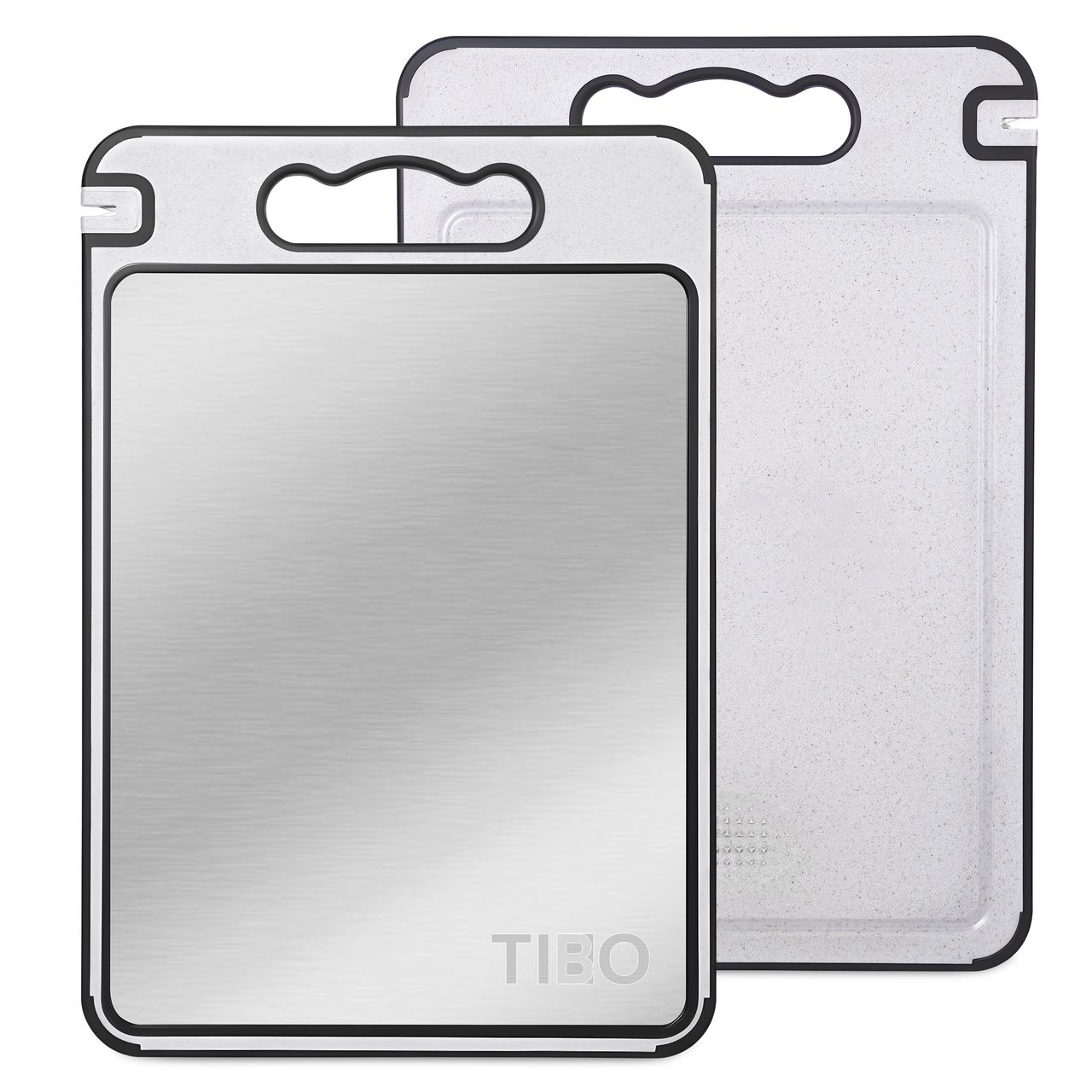
Our #1 Pick for 2026
TIBO 4-in-1 Titanium Cutting Board
Medical-grade titanium. Zero bacteria. Zero microplastics. Built-in knife sharpener & garlic grater.
Check Price →Citations
- Cliver, D.O. (2006). "Cutting Boards in Salmonella Cross-Contamination." Journal of AOAC International, 89(2), 538–542. University of California, Davis.
- Hernandez, L.M. et al. (2023). "Microplastics Generated from Cutting Food on Plastic Cutting Boards." Environmental Science & Technology, 57(22), 8264–8272.
- Leslie, H.A. et al. (2022). "Discovery and Quantification of Plastic Particle Pollution in Human Blood." Environment International, 163, 107199.
- Fujishima, A., Rao, T.N., & Tryk, D.A. (2000). "Titanium Dioxide Photocatalysis." Journal of Photochemistry and Photobiology C: Photochemistry Reviews, 1(1), 1–21.
- ASTM F67-13. "Standard Specification for Unalloyed Titanium for Surgical Implant Applications." ASTM International, West Conshohocken, PA.
- Lütjering, G. & Williams, J.C. (2007). Titanium (2nd ed.). Springer-Verlag Berlin Heidelberg. ISBN 978-3-540-71397-5.